
Are New Jersey Mugshots Public?
Sometimes yes, sometimes no. No state rule forces an agency to post or hand over a booking photo. OPRA defines a government record broadly, and photographs kept for official business fit that definition. Release still hinges on exemptions, court rules, privacy protections, any active investigation, and whether the agency must maintain the image at all. The statute's arrest-information rule lists facts due within 24 hours. A mugshot is not on that list. The Government Records Council drew this line in its Nance v. Scotch Plains decision. The arrest report and the disorderly-persons complaint went out. The custodian withheld the photo as a criminal-investigatory record. Under the ruling, the image was not required to be made, kept, or kept on file. That reasoning is narrow, not a blanket seal. It simply shows why the wording of a request matters, and why each agency's own records shape the answer.
Public does not mean automatic. A booking image is an identifying record. Check the court disposition before treating it as the final word on the case.
Nance shows arrest details released while the photo got separate treatment.
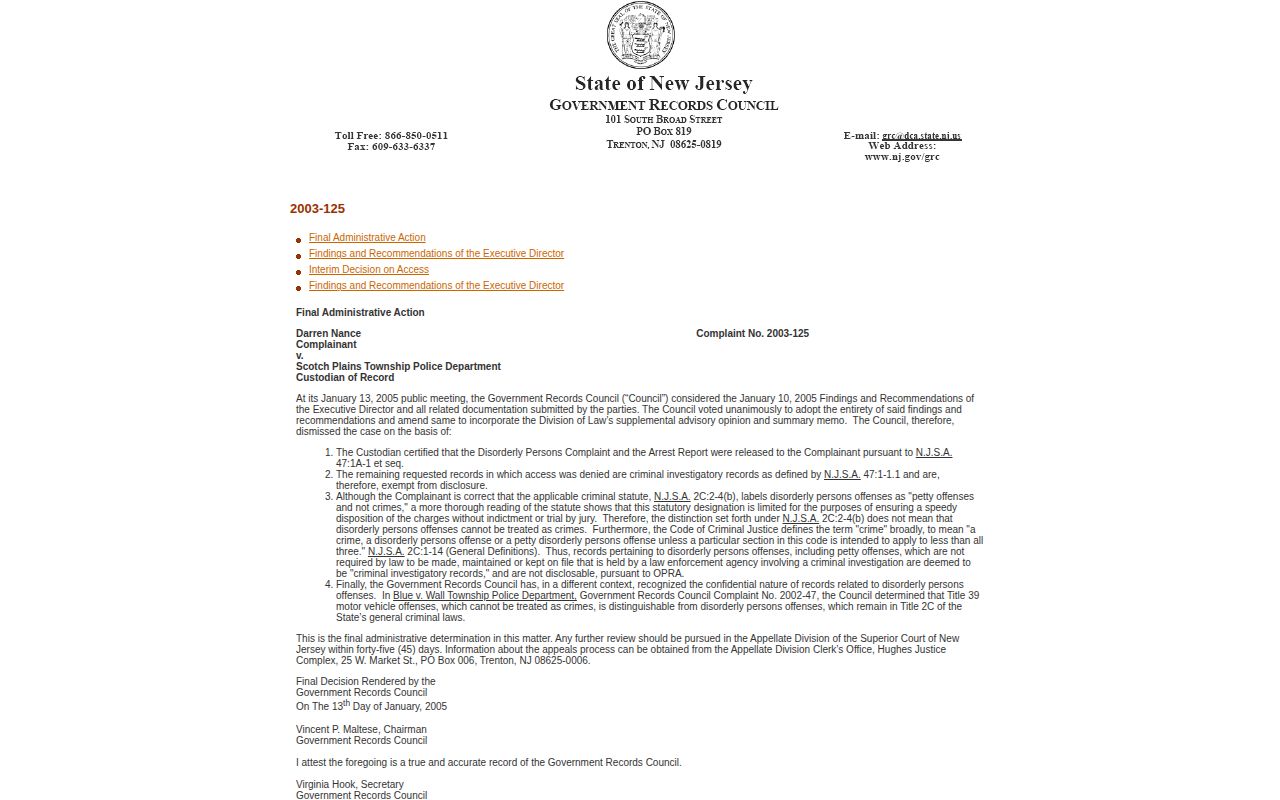
Request the report and the photo as separate records. If one is withheld, read the custodian's stated reason before deciding a next step.
New Jersey OPRA and Arrest Photos
OPRA, N.J.S.A. 47:1A-1 et seq., opens records held by New Jersey public agencies unless an exemption or another law applies. Listed arrest information moves faster. N.J.S.A. 47:1A-3(b) calls for an answer within 24 hours or as soon as practicable. The list covers the defendant's name and basic background. It also covers charges, unless sealed or restricted. Arresting agency and personnel, the immediate circumstances, and bail facts appear there too. An agency can still withhold material for safety, an open investigation, privacy, a court order, or another legal reason. A full ordinary OPRA request runs longer. The outer limit is generally seven business days. That deadline covers only the response, not the release itself. An agency may deny a record, redact protected details, or extend a response under the statute. Ask for a record that exists. Broad questions about a person invite denial instead. The arrest-information provision and its exemptions sit in the current Government Records Council OPRA text. The Council's response-time guidance explains the ordinary deadline and why a fast window never guarantees a release.
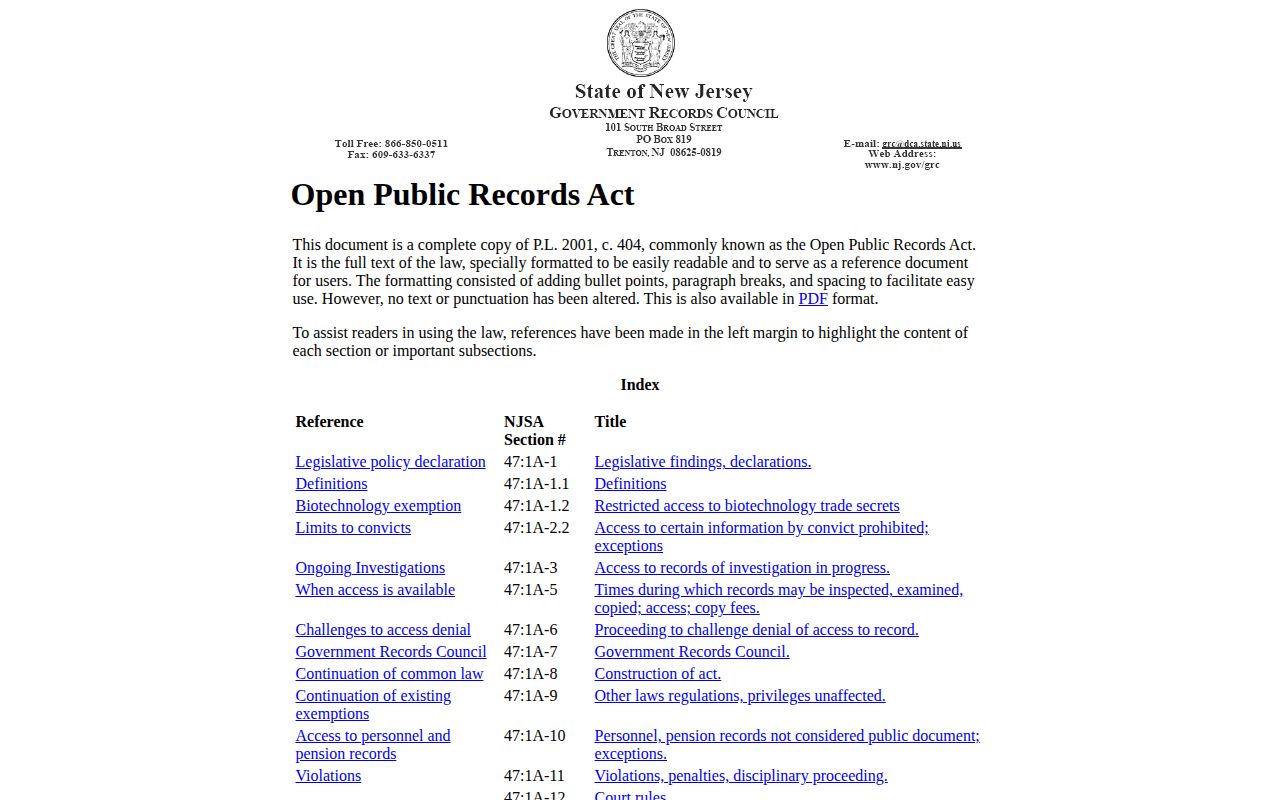
The statute explains why a custodian can release arrest facts and still weigh a photo under a separate exemption. New Jersey also shields juvenile records. N.J.S.A. 2A:4A-60 governs that protection. Juvenile names and photos are not adult booking records. Treat them differently unless an official source confirms lawful disclosure. Victim details, active investigative material, and court-ordered records deserve the same care.
New Jersey’s 2017 Mugshot Law
P.L.2017, c.123 took aim at websites that demanded money to keep arrest details out of sight. The law added N.J.S.A. 2A:58D-3 and -4. It bars soliciting or accepting an economic benefit in exchange for not disclosing information that identifies a person as arrested, charged, prosecuted, or convicted. An arrest photograph counts expressly. The ban covers later disclosure too, made after the prohibited payment. Ordinary reporting is untouched. Lawful public access survives too. The law does not force a sheriff to remove a record on request. Nor does it erase an arrest after dismissal. Instead, it creates a civil action with penalties. Remedies include actual damages, minimum liquidated damages, possible punitive damages, fees, and equitable relief. Victims must prove their case. A claim still rides on the facts and court process. The statute is not an automatic payout for every person pictured online. The Legislature balanced public access against lasting humiliation when arrest details spread online. The intent was simple. Nance is a pre-2017 OPRA decision about one police photo, not a ruling under the anti-extortion statute. In short, the law attacks the payment-for-silence bargain. It does not turn a publisher's correction policy into an expungement order. It never declares every booking photo confidential either.
What New Jersey Records Remain Available
A missing photo rarely ends the search. County custody pages often list who is being held right now. The arresting agency keeps its own report. Prosecutors sometimes publish selected releases. NJ Courts can show a public criminal case with its outcome. NJDOC covers the state-prison layer rather than a fresh county arrest. Federal and immigration custody sit in separate systems entirely.
- Identify the county and town involved, then check its official roster or custody page for current status.
- Ask the arresting agency for the arrest record and photograph separately under its OPRA process.
- Search NJ Courts by name and, when known, case, indictment, or SBI number to follow the court result.
- Use NJDOC if state custody is likely; use BOP or ICE for their separate custody systems.
- If a source is silent, treat that as no public match there, not proof that no record exists.
The statewide New Jersey booking and roster overview lays out how the counties differ, source by source. NJDOC profile photos are a separate agency record and may follow a different web-visibility policy.
Why New Jersey Mugshots Vary
New Jersey counties handle photos their own way. There is no uniform feed. Salem's public profiles can include photos. Middlesex runs an Archonix system with current, date-range, booking-log, released-today, and wanted tabs, and Union describes a daily lookup that can still be stale or incomplete. Cape May posts a text-based list each business day. Many counties have no public roster at all. So an absent photo proves nothing about whether an agency took or kept one.
Rosters often cover current custody only. A blotter picks selected incidents, and a press release may spotlight one serious case. Someone freed before the next update can drop off. For older or missing records, the original custodian's request process beats guessing from a third-party page.
Commercial aggregators republish selected county material or historical indexes, and their pages can be stale, wrong, or incomplete. They confirm neither current custody nor outcome, and their existence changes nothing about what OPRA requires of an official agency.
New Jersey Sealing and Expungement
Expungement here runs on N.J.S.A. 2C:52-1 et seq. There is more than one path. Eligibility turns on the offense, the disposition, the record type, sentence completion, fines, prior matters, and which statute applies. Clean Slate generally uses a 10-year period. Regular and early routes carry different waiting rules. Dismissals, acquittals, diversion outcomes, juvenile matters, and certain marijuana cases each have their own rules. A dismissal alone does not wipe every record or photo.
New Jersey Courts posts expungement instructions and a filing kit. The eCourts system can accept an eligible petition online. A final order goes to every listed criminal-justice custodian: the court, State Police, prosecutor, arresting agency, and correctional facility. That reach can extend to an official booking or identification record covered by the order.
An order does not control private copies. Unrelated news images, screenshots, cached results, and records in other jurisdictions sit outside it. Follow the order's recipient list and ask each official source to update what it controls. Keep the entered order and any agency response.
The NJ Courts public case system can show the later case record, though sealed or expunged details may no longer be public.
Rely on the court instructions for eligibility and filing. A search result never proves an order was granted. The court kit and the statute control exact eligibility, and this records page does not decide whether a particular case qualifies.
Correct the Official Record First
Start with the agency that created the record. Ask it to fix a wrong name, charge, or status at the source. If an expungement order covers the entry, send it to the official recipients. Agencies may update an online entry after the file changes. Timing and public display are not uniform statewide.
Search engines have their own removal tools. Those tools can refresh or restrict a result after the source changes, but they never expunge a court or agency record. Fix the source first. That gives the engine a current page to recrawl. Keep copies of the decision and request.
News publishers have correction processes too. A free factual correction fits when a story misidentifies someone, uses the wrong image, or leaves out a later outcome. It does not promise deletion of an accurate story. An image in a story may be a file photo or agency release rather than a jail booking photo.
Free New Jersey Listing Corrections
Some publishers offer free corrections for specific documented outcomes. Those are private policies, not state orders. Read the policy on the publisher's own site, then send the exact listing URL with the court or agency record it requests. No paid removal service is needed to make a New Jersey OPRA or expungement request.
| Publisher | What its published policy says | Limit |
|---|---|---|
| BustedNewspaper | Its free listing form asks for the listing URL and documentation such as expungement, dismissal, acquittal, or a sealed-record order. | A publisher correction is not a government expungement. |
| RecentlyBooked | Its policy describes free review for dismissal, expungement or sealing, outdated or wrong-person entries, juvenile records, and duplicates. | It says accurate, current public records are generally not removed on request alone. |
| Mugshots.com | Its record-maintenance policy describes free updates or removal for specified legal outcomes when documentation is supplied. | Its stated review can take time and is not a court order. |
| Arrests.org and Mugshots.zone | No reliable statewide free removal policy was verified in the research review. | Do not assume a policy, fee, address, or turnaround that is not published. |
The Mugshots.com record-maintenance page says it does not charge for its listed update process.
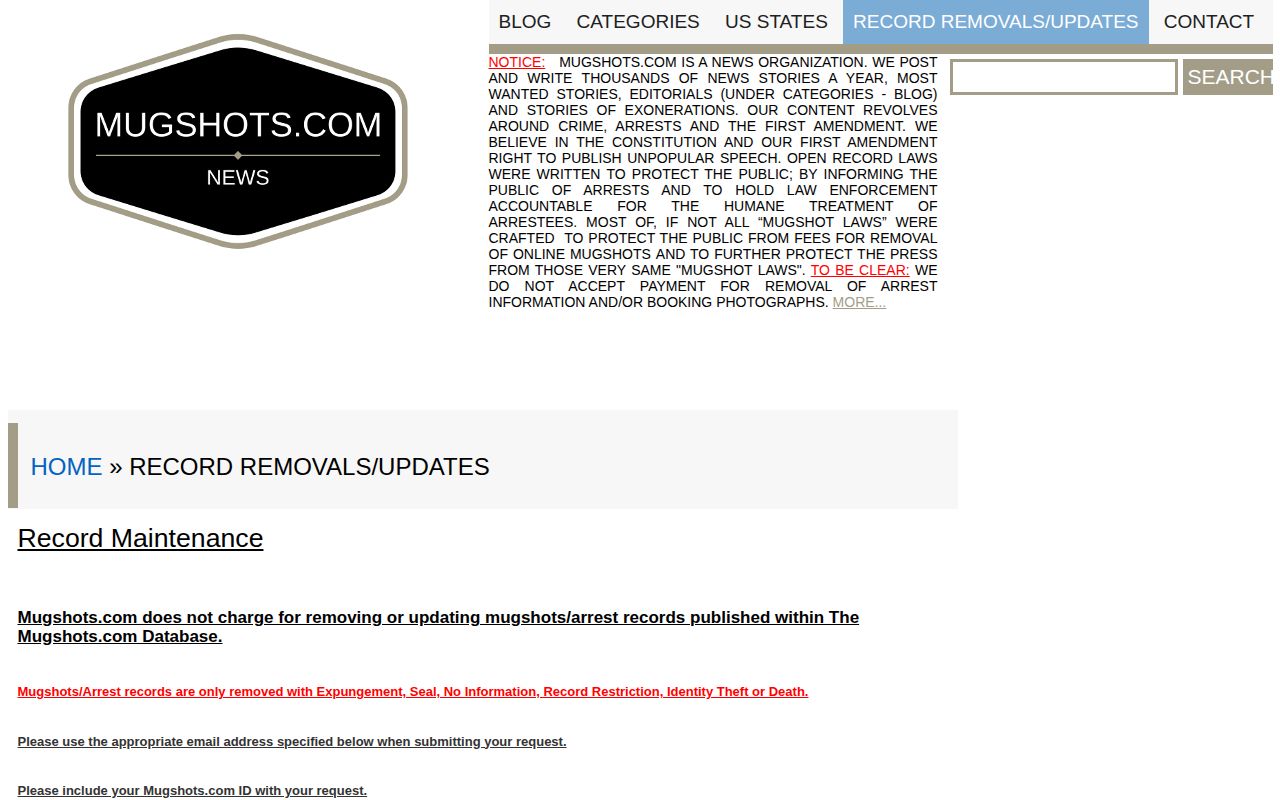
A policy page sets the publisher's process. It does not decide whether the underlying New Jersey record should be sealed. The Mugshots.com New Jersey section is an indexed secondary collection, not a live official jail roster.
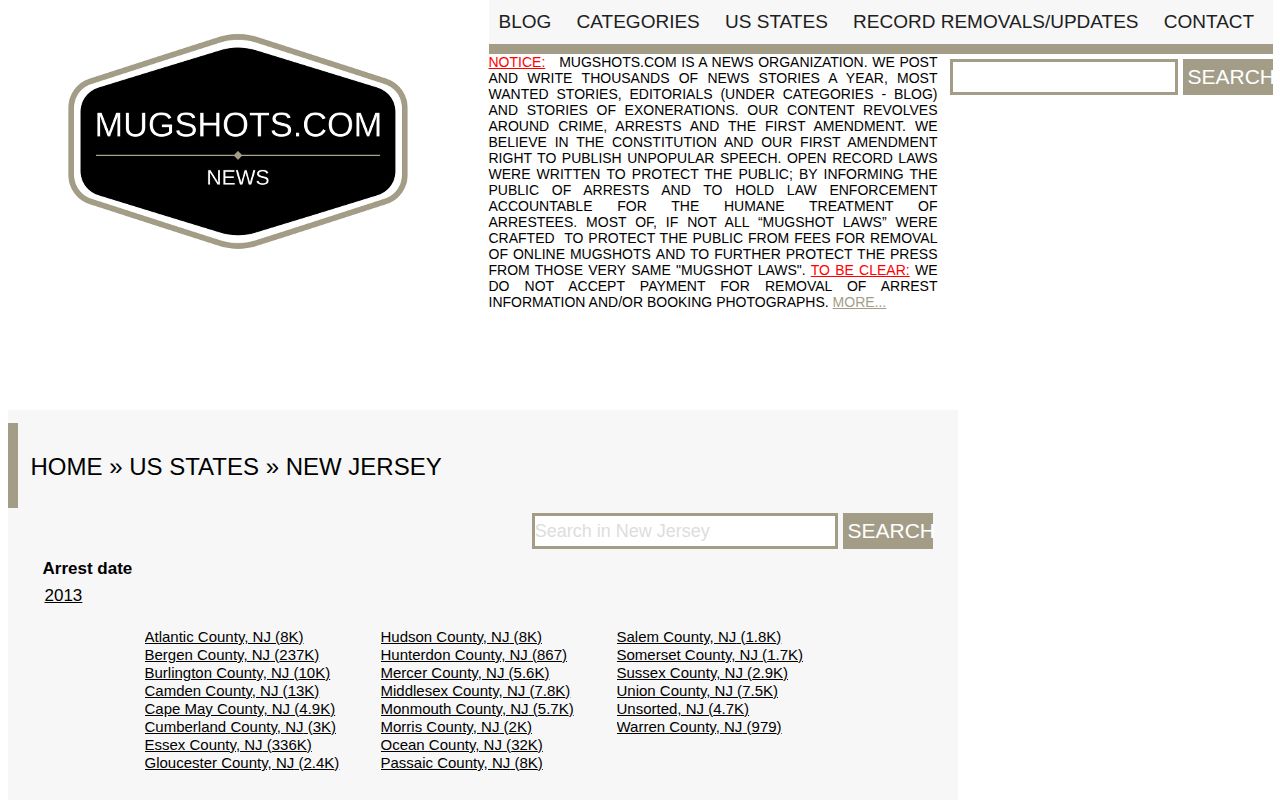
Check any indexed entry against the agency or court. The original record may have changed after publication, and RecentlyBooked's New Jersey navigation covers only selected counties, not a complete statewide list.
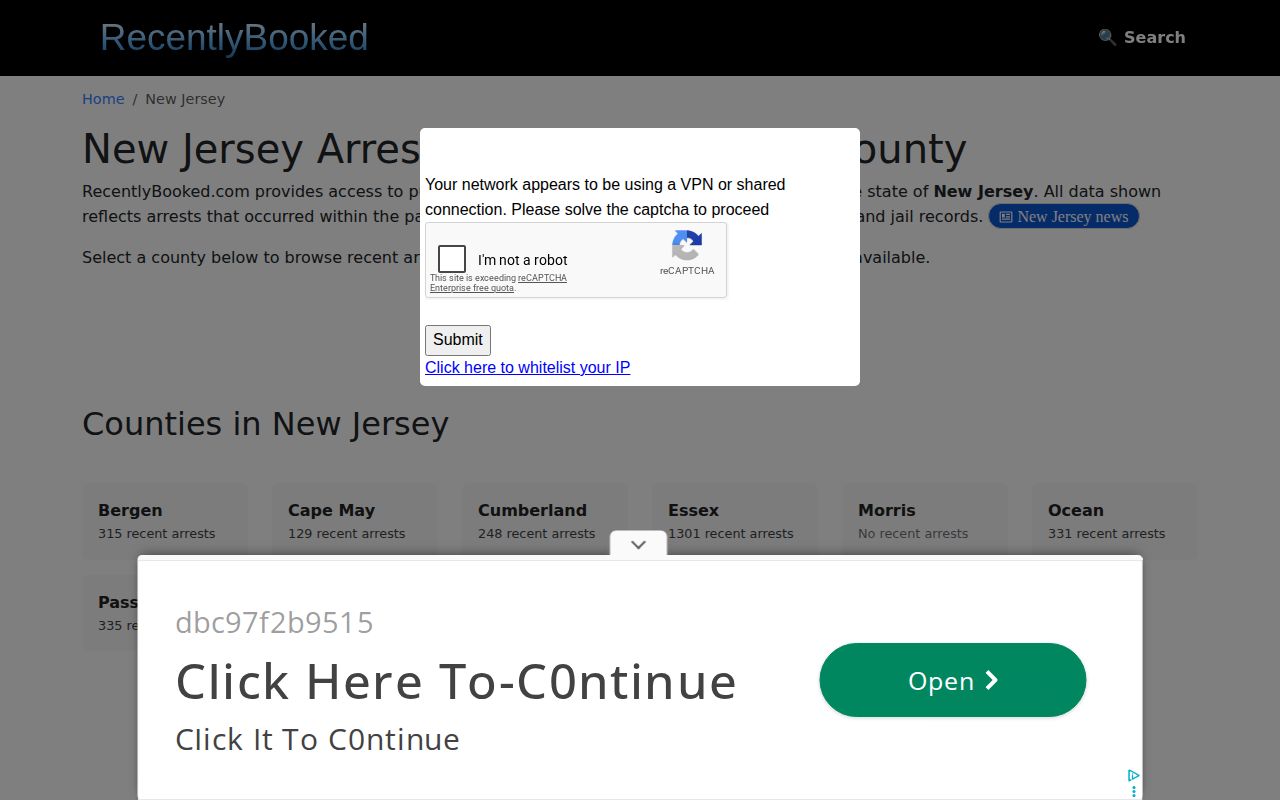
The coverage view above is only a lead. It does not define public access under New Jersey law.
The Mugshots.zone landing page is another unofficial source. Its New Jersey listings may not be complete. Where no clear free policy exists, skip the guesswork. Use the official agency and court paths for removal.
New Jersey Mugshot Accuracy
An arrest photo captures one intake event. An old entry may lag behind the case itself. Dismissals, acquittals, reduced charges, reversals, and expungements can all come later. The listing may never change.
If a case outcome matters, check the official docket. Keep the record source and retrieval date with any result you save.
When an online profile is wrong, ask the originating agency to fix it. Also ask any private publisher, using reliable records. New Jersey law, OPRA access, court relief, and private correction policies each answer a different question. Match the tool to the problem.