
What New Jersey Busted Records Show
Booking follows an arrest in New Jersey. A photo taken at that point shows how the person looked, nothing more. The court's decision lives in a different file. A county criminal record, a federal docket, or an old police archive may each hold one piece. No single search result or news image stands in for the court's final entry.
State law treats arrest details and booking photos differently. Under the records law, people may request certain government records, though exemptions and the facts of a case shape what gets released. A written report naming the arresting agency, the charge, and bail can be handled one way. The photo itself may be treated another way. Acquittals, appeals, and plea deals all show up in the court file, so that is where the last word sits.
The Open Public Records Act text spells out what arrest information is covered and which exemptions apply. Ask for a report and you may get one answer. Ask for an image and the answer can change.
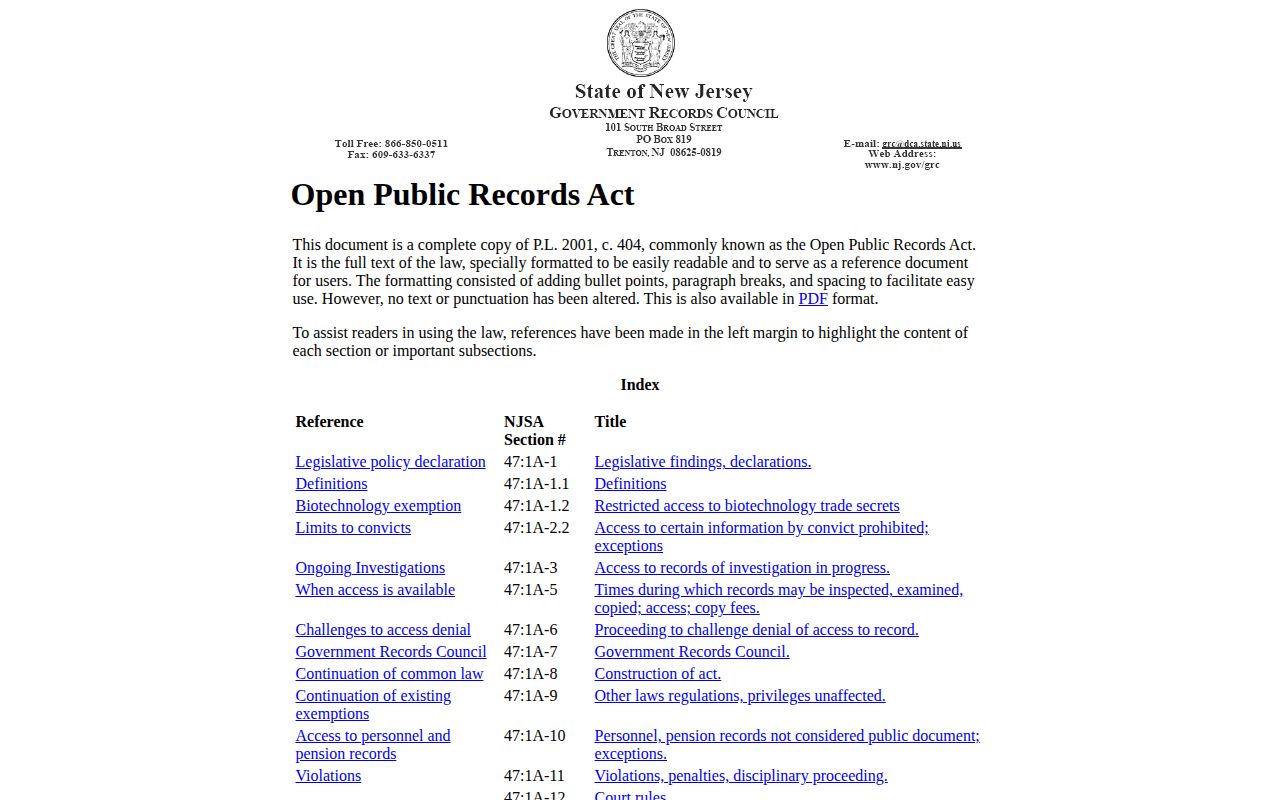
Release is never guaranteed. Ask the agency that created the record to identify the item and explain anything withheld. The Government Records Council's Nance decision handles the photo question apart from other arrest information. It is useful context. Each request still turns on its own facts.
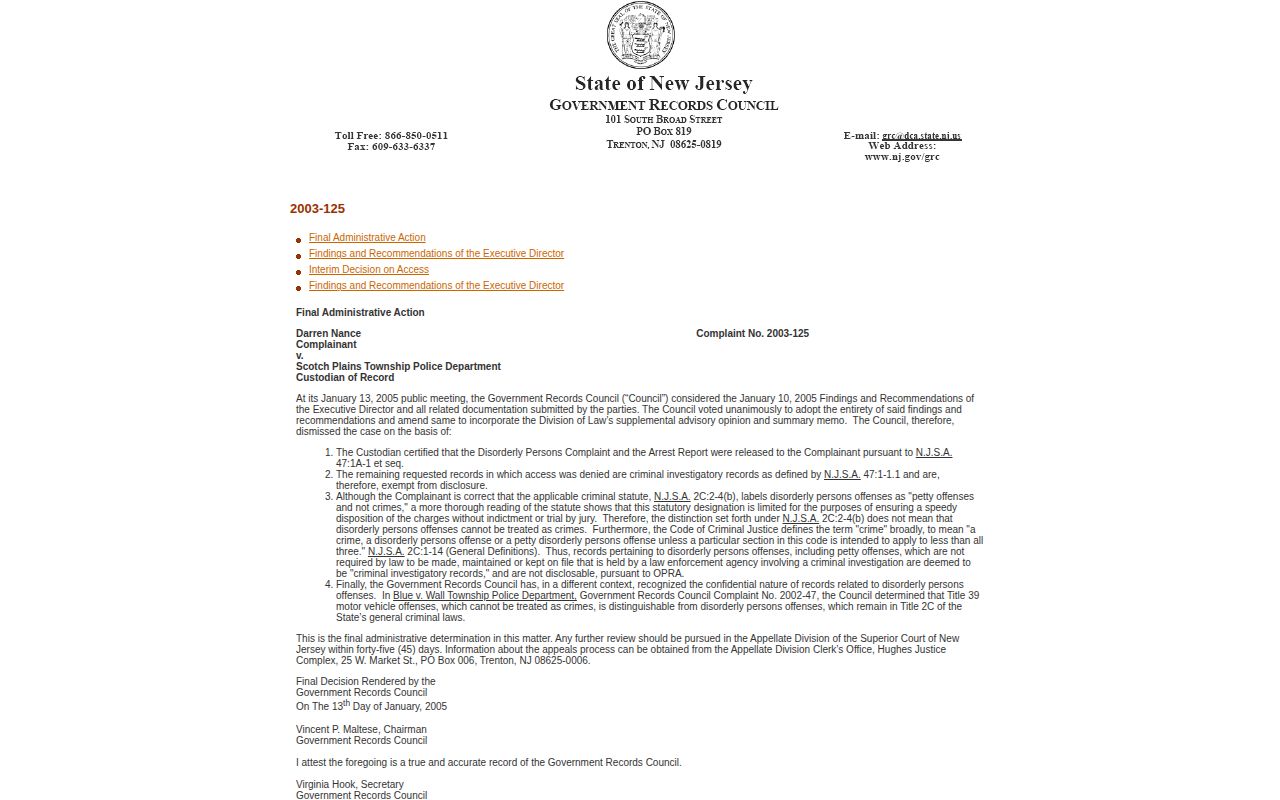
No photograph is needed to confirm an outcome or to find which office holds the file.
Notable New Jersey Arrests
Court opinions, prosecutor materials, federal filings, and news archives document these six cases. The agencies listed show jurisdiction. They do not necessarily show a New Jersey jail intake. Treat the table as a map to record custodians, not a gallery. No official booking-photo source exists for these cases.
| Case | Year and agency | Disposition | Where the original record lives |
|---|---|---|---|
| Amy Locane | 2010; Montgomery Township Police, Somerset County | Convicted; sentencing reviewed on appeal | Somerset County court and investigation files, plus New Jersey Courts opinions |
| Charles Kushner | 2004; FBI, IRS, U.S. Attorney, District of New Jersey | Guilty plea; 24-month federal sentence in 2005 | Federal criminal docket and U.S. Department of Justice materials |
| Bridget Anne Kelly and Bill Baroni | 2013 lane closures; 2015 federal charges | Trial convictions reversed in 2020; remaining case dismissed in 2021 | Federal court docket, trial exhibits, and Supreme Court opinion |
| Robert Menendez | 2023; FBI and U.S. Attorney, Southern District of New York | Convicted in 2024; sentenced in 2025 | Southern District of New York docket, indictment, and DOJ filings |
| Jayson Williams | 2002; New Jersey State Police and Hunterdon County Prosecutor | Acquittals on major counts, convictions on other counts, later plea and sentence | Hunterdon County court file and New Jersey Attorney General records |
| John List | 1971 crimes; arrested in Virginia in 1989 by federal agents | Convicted in Union County in 1990 | Union County court and prosecutor files, Westfield Police records, and news archives |
A court opinion explains a ruling. An indictment lists charges. A docket tracks filings. None of these is a booking photo, and the gap matters most in federal cases and arrests made outside New Jersey. For current status, read the latest docket entry or opinion. Always weigh each charge against its own disposition.
New Jersey Busted Arrest Records
Amy Locane. Police arrested Locane after a fatal 2010 crash in Somerset County. The case ran under docket 10-12-0770. The Appellate Division's published opinion records a conviction for aggravated manslaughter and assault by auto. It also covers years of sentencing litigation. The New Jersey Courts opinion in State v. Locane is the strongest public starting point for that appellate history. The original criminal file belongs to the Somerset County court, the police, and the prosecutor. Crash records sit there too. The sheriff lists no official booking photo. A news image should never be relabeled as one.
Jayson Williams. Williams was arrested after a 2002 shooting death at his Hunterdon County home. The verdicts shifted over time. The jury acquitted him of aggravated manslaughter and several shooting counts. It convicted him on four counts tied to conduct after the shooting. It deadlocked on reckless manslaughter. In 2010 he pleaded guilty to an amended aggravated-assault charge. He received a five-year state sentence. That count replaced the unresolved manslaughter charge, and the sentence carried 18 months without parole. The New Jersey Attorney General's sentencing release lays out the sequence and concurrent terms. The Hunterdon County court file and the state police investigation are the original routes. Both the acquittal and the later plea belong in any account of the disposition.
The New Jersey Courts public case portal provides statewide case information and outcomes. A docket supplies context no booking feed can offer.
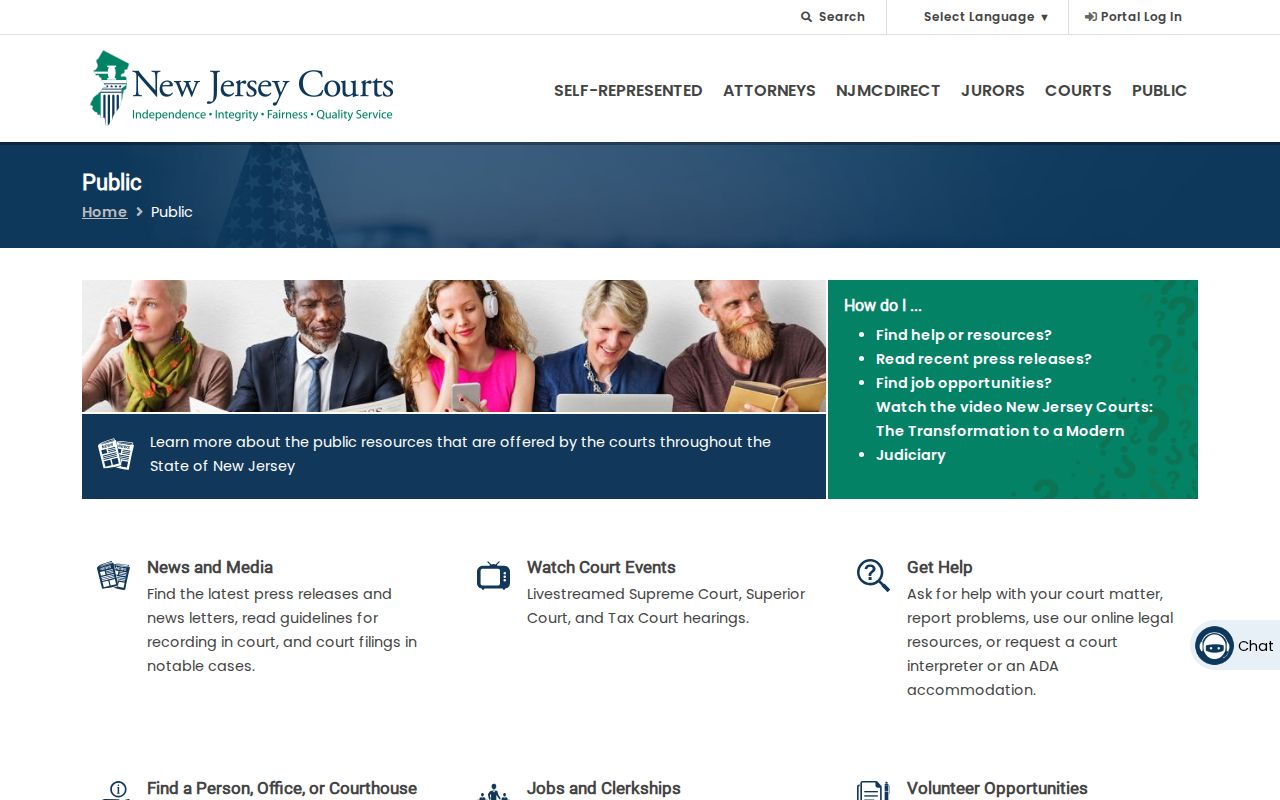
Search by case number first when you have one. Then compare the court entry against the arresting agency's record, since the two do not always match. The portal is not a jail roster and may not carry a photo. Lookup lesson: for an arrest prosecuted in New Jersey, start with the county criminal case and its disposition.
Federal Cases Beyond New Jersey
Charles Kushner. Federal prosecutors charged him in New Jersey in 2004. That August he pleaded guilty to witness retaliation, false tax returns, and false statements to the Federal Election Commission. A judge handed down 24 months in March 2005. For the paper trail, the U.S. Attorney's sentencing release and the federal docket are the public routes. The Bureau of Prisons locator posts no booking photo. Federal cases simply do not file one there.
Robert Menendez. His 2023 indictment came from the Southern District of New York, not a New Jersey state court. A jury convicted him in July 2024. In January 2025 he received an 11-year sentence. The indictment captures the charges as filed, while the SDNY sentencing notice gives the final result. The full record sits in the SDNY docket, trial exhibits, and DOJ filings. No official booking photo appears there, and a campaign or press portrait fills no gap.
A New Jersey tie never makes a state case. That distinction matters. The district court named in the charging paper controls the motions, verdict entries, and sentencing orders in every federal matter.
Reversals and Historical Records
Bridget Anne Kelly and Bill Baroni. Bridgegate grew out of 2013 lane closures at the George Washington Bridge. Both were convicted at trial. The U.S. Supreme Court reversed those convictions in 2020. The Court ruled that federal fraud law demands a scheme to obtain money or property, and the lane realignment did not meet that bar. Prosecutors dismissed the remaining case in 2021. The federal docket, trial exhibits, and Port Authority records hold the complete account. A verdict headline alone tells only part of the story.
John List. The crimes took place in Westfield in 1971. Virginia is where he was finally arrested, in 1989. A television appeal produced the tip, and federal agents took him into custody. Returned to New Jersey, he was convicted in Union County in 1990 and sentenced to five consecutive life terms. UPI reported his death in state custody in 2008. The arrest report covers the out-of-state apprehension, and a newspaper archive records the verdict. Union County courts and prosecutors, Westfield Police, and fugitive agencies keep the original files. No image from later years stands in as a New Jersey booking photo.
For older correctional collections, the New Jersey State Archives access page lays out research and reproduction options. A catalog entry alone does not prove a person's file or photo survives. Ask staff directly. Access rules vary.
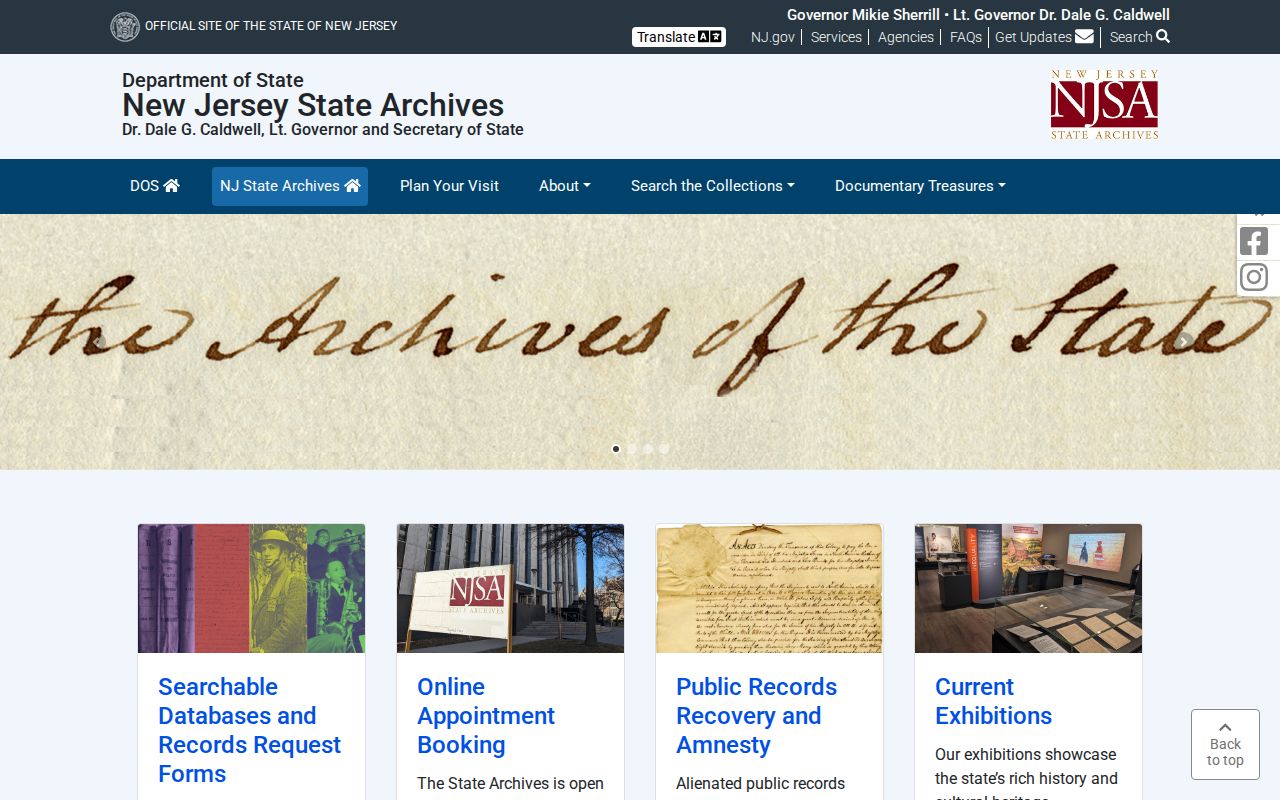
Check the date range and series before requesting any scan. Archives staff can confirm access limits, copy requests, and appointment needs. The State Archives catalog searches by institution and collection, not just by name. It is not a photo vault. Think of it as a finding aid. It does not promise a digitized picture for every person.
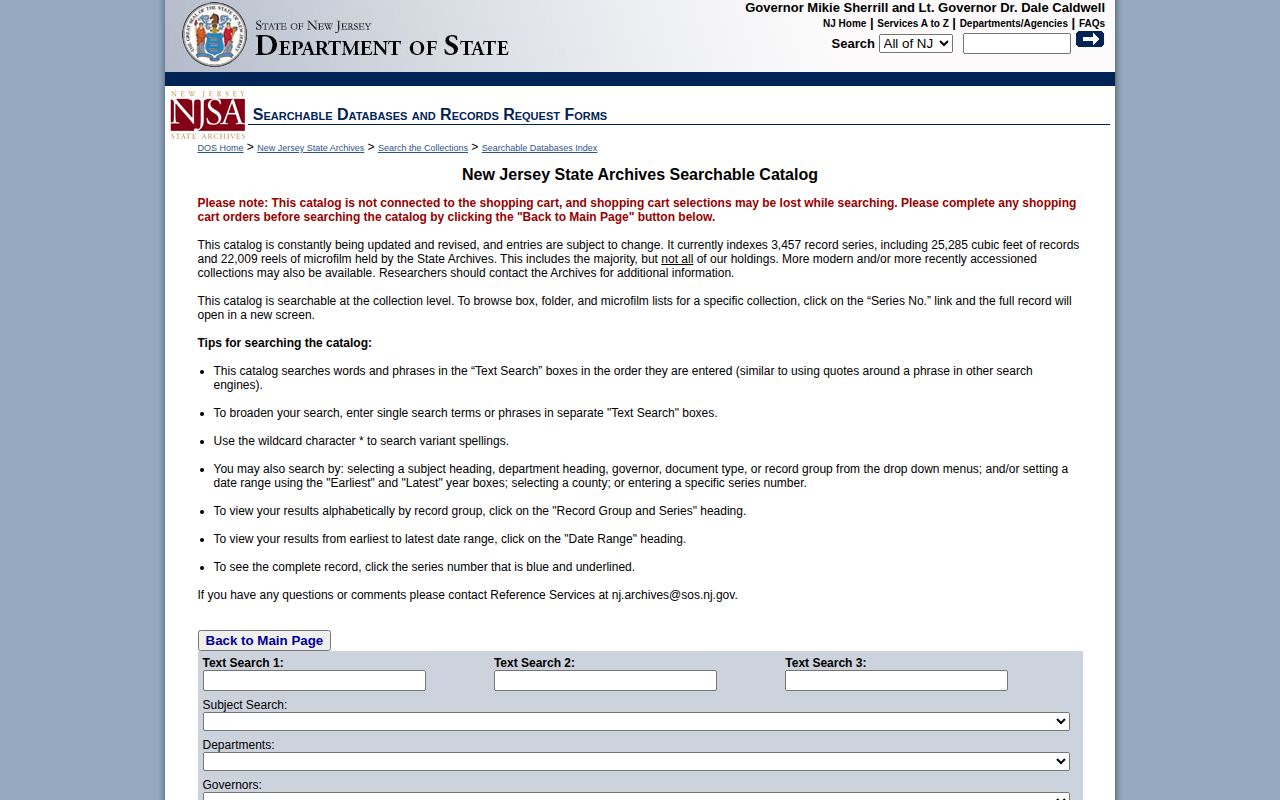
Use each result to probe the series. For a recent arrest, the police agency or county court is usually the direct custodian.
Find New Jersey Busted Mugshot Records
Start with the named agency or court. Match name, date, county, and case number first. Two records belong to one person only after that match. A booking roster shows intake and release. A court file shows charges and outcomes. Older material may need a written request or an archive search.
- Note the name, arrest date, county, and any docket or complaint number in the source.
- Check the arresting agency's record. Ask for the booking report and photo separately, since they may be treated differently.
- Search the correct court for charges, motions, verdict, plea, and sentence. The disposition is the court's outcome.
- For older state-prison material, search the Archives catalog. For federal cases, use the district docket in the charging papers.
The statewide New Jersey arrest lookup maps county booking sources and the path to a court result. It saves steps. For older material, Old Mugshots covers collection dates, retention rules, and archive requests. That page handles the deep past. Combine both when a trail runs cold. One search rarely tells the whole story.